- soak pans in cold water
- use warm water to scour pans
- sprinkle bicarbonate of soda in bottom of the dish where the brillo is stored
- for hard to clean pans, boil with small amount of water and fallen leaves
- scrape non-stick pans with an old credit card
- for dirty copper-bottomed pans rub with rhubarb leaves, chopped into small pieces and boiled in the pan, then put the dirty pan inside
- use the nets which onions come in, sewn up, as pot scrubbers
- for badly burned pans, sprinkle biscarb inside
- glass/pyrex sprinkle oven cleaner on
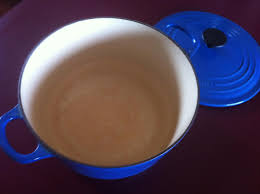
- enamel - lemon juice and salt, leave an hour, then non-abrasive scourer
- scrambled egg on pans - cold water
- rust - raw potato
- clean a stainless steel sink with fizzy soda water
- polish brown boots with a banana skin.
31 July 2013
Clearing up
Some hints and tips for cleaning in the kitchen:

25 July 2013
Ivan Hewett's Classic 50
This looks like a good series in order to learn more about classical music:
The Telegraph's brilliant critic Ivan Hewett tells the history of classical music in 50 short pieces. Each track is under six minutes long and you can listen to them all here (http://www.telegraph.co.uk/culture/music/classical-music-guide/) thanks to Spotify. Register for Spotify's digital music service for free at www.spotify.com. Please add #ivans50 to your tweets about the series.
 "What exactly is classical music? Listen to Classic FM, or look for guidance to classical compilations on CD, and you could easily get the impression that classical music is just a few dozen pieces, endlessly recycled.
I should say straight off that there’s not anything wrong with popular classics. The reason pieces like Nessun Dorma and The Lark Ascending are popular is that they’re wonderful. But even the greatest piece can get tired from overuse. And it ignores the most wonderful thing about classical music, which is that it’s a vast ocean, waiting to be discovered. Three lifetimes wouldn’t be enough to plumb its depths.
The Telegraph's brilliant critic Ivan Hewett tells the history of classical music in 50 short pieces. Each track is under six minutes long and you can listen to them all here (http://www.telegraph.co.uk/culture/music/classical-music-guide/) thanks to Spotify. Register for Spotify's digital music service for free at www.spotify.com. Please add #ivans50 to your tweets about the series.
 "What exactly is classical music? Listen to Classic FM, or look for guidance to classical compilations on CD, and you could easily get the impression that classical music is just a few dozen pieces, endlessly recycled.
I certainly can’t hope to plumb it in a series of 50 pieces. What I can do is give some idea of classical music’s immense range. I’ve been guided by some very simple principles. First, no opera. That’s another series. Second, these are all pieces that I simply love as music. I’ve avoided Towering Masterpieces. One gets a crick in the neck from looking up at Towering Masterpieces, and they do tend to go on a bit. Which led naturally to my third principle: nothing longer than six minutes.
At the same time I’ve tried to squeeze as much variety of style and sound in as possible. This has involved roaming over the whole of classical music, from medieval to modern, from Russia in the North to Australia in the South, from solo piano to huge orchestra. What the pieces have in common for me is that shock of pleasure and recognition you get from certain works of art, almost as if they were waiting for you to discover them.
In that sense, appreciating classical music (as with any sort of music) is very like love. We can’t all love the same things, and I expect you’ll probably detest some of my choices, just as in life we find ourselves saying, “I can’t see what she sees in him.” But I hope you will fall for at least some of my 50 six-minuters."
21 July 2013
Car
When I started driving forward out of my parking space I suddenly realised that an orange car parked front of me and one space to the right was starting to back out, so stopped.
He stopped too, luckily. But then, horror! he started moving again. No time to act, so I banged repetitively on the horn, and still he kept coming, bashing into my left hand front bumper, luckily not damaging my headlights.
 |
| Not my bump, but it's not much bigger! |
There was an enormous dent, complete with orange paint! The other car had a much smaller bump, and none of my car's black paint had transferred to his.
My car was completely drivable so motored up to Derby, spent a few days there, and then drove all the way back again.
I understood that such accidents had to be reported to my insurer within 24 hours, so did accordingly and was told that we were both liable as it happened in a car park and we were both manoeuvring. Well, I said I wasn't moving, I had stopped! But the operative on the end of the line said that, nevertheless, it was still both our faults! As you can imagine, I'm not at all happy about this.
Difficult to say.
I have had a quotation for a new bumper £467! It's only a dent, so that seems excessive.
The insurance company have arranged to take the car away for assessment, offering me a car in the interim.
This seems rather like a rather large hammer to crack a walnut.
So I've been looking up information on the internet, and found the following:
http://www.churchill.com/car-insurance/claims/what-happens-next.htm
According to moneyadvice service this is what to do after an accident:
- Report it
- Check your policy
- Find the documentation
- Get your facts straight
- Call the insurance company's helpline
- Give the details clearly
- Don't exaggerate
- Document the damage
- Document the claims process
If your claim's rejected, here's what to do next: https://www.moneyadviceservice.org.uk/en/articles/what-to-do-if-your-insurance-claim-is-rejected
7 July: I persuaded the insurance company that the car didn't need to be removed for assessment, so a mobile assessment's been arranged.
19 July: No contact has been received from either the insurance company or the repairer. So I rung the insurance company today and the car's been assessed for repairs at a cost of nearly £800! - no wonder our insurance premiums just go up and up!
I was pleased to find out that the other insurance company has accepted liability. Whew!, so glad about that!
23 July: Having heard nothing from the proposed car mender, I rung the insurance company to suggest that I'd rather the work was carried out by the garage which gave the first quote. They said that this was quite in order, so long as the quotation was approved by their people. So I have emailed them a copy of quote and await approval.
7 August: The car's now been repaired and looks as good - if not better - than new! Many thanks to Paignton Body Repair Centre, (Tel: 01803 556527) and it just goes to prove that so often repair garages must inflate prices for 'insurance jobs'!

13 July 2013
According to the Mail's Victoria Fletcher:
Doctors call for a ban on face cream chemical blamed for an epidemic of skin allergies
** The chemical has been increasingly used in products since 2005 to extend there shelf life
** It is routinely added it to moisturisers, sun creams, shampoos and wet wipes
Doctors are calling for an immediate ban on a face cream chemical they say has triggered one of the worst skin allergy epidemics ever seen.
 Dermatologists estimate that one in ten patients they are seeing with eczema or dermatitis is allergic to the preservative – called methylisothiazolinone or MI – which has been increasingly used in products since 2005.
Cosmetics firms like MI because it extends the shelf life of their products. They routinely add it to moisturisers, sun creams, shampoos and wet wipes.
It is used in products including Nivea Daily Essentials face wipes, Piz Buin 1 Day Long Lotion, Clarins Extra-Firming Day Cream, L’Oreal RevitaLift Laser Renew, Molton Brown Paradisiac Pink Pepperpod Body Lotion and Wet Ones hand wipes.
Doctors blame the chemical for a massive surge in patients with rashes, scaling skin, swelling and eczema.
The problem will be discussed at a major dermatology conference in Liverpool this week.
 Dr John McFadden, a consultant at St Thomas’ Hospital in London, told The Mail on Sunday: ‘This is one of the worst outbreaks of allergy to cosmetic products I have ever seen.
There hasn’t been anything on this scale before. We just don’t know when it will peak.’
Two years ago, MI allergy, identified with skin patch testing, was virtually unknown. But this year 10 per cent of patients with certain skin conditions are testing positive, according to the St John’s Institute of Dermatology in London and Nottingham University Hospitals. Studies from Denmark and Australia paint a similar picture.
Dr John English, a consultant dermatologist at Nottingham University Hospitals said: ‘This is an epidemic and urgent, immediate action is needed. Every day we are seeing patients who are allergic to this chemical. Patients don’t realise it’s their cosmetics causing the problem so they keep on using them.’
Manufacturers started to use MI seriously about five years ago after it was approved by the European Commission as a preservative for products left on the skin in 2005. At the time, the available data suggested it was safe. Experts say the true scale of the problem has only come to light as a result of it being used by millions of people.
The preservative stops products going mouldy by binding to microbes, preventing the bugs from thriving. However, the immune systems of some people mistakenly identify MI as a threat, prompting an allergic reaction.
Molton Brown said last night it would stop using MI from September. L’Oreal, Clarins and Wet Ones said their products were safe.
An EC spokesman said its scientists were looking into the concerns ‘in detail’.
Some of the products involved are listed in this pic (below), including Wet Ones; Head and Shoulders Anti-Dandruff Smooth and Silky Conditioner; Dove Men; Clarins Extra-Firming Day Cream; Nivea Lotion and Brylcreem Gel.
 |
| A list copied from The Mail of the relevant products |
Also:
Re wet wipes, here's an alarming link:
http://www.guardian.co.uk/environment/shortcuts/2012/oct/26/wet-wipes-wreaking-havoc-sewers

Time was when British bottoms were built to withstand the crinkliest, shiniest toilet paper available, and in some cases even to enjoy it. But there has been a fundamental softening in recent years, seen in a growing preference not only for quilted loo roll, but now for wet wipes.
The musician Will.i.Am is one leading exponent of damp bottom-wiping. The consequences for our drains, though, are disastrous.
If you swill a piece of toilet roll around in some water, it takes seconds for it to disintegrate. Wet wipes should never be put down drains, because they don't break down – even if the packaging says they are 'biodegradable' or 'flushable'. Only human waste and loo roll should go down our sewers."
Ignoring this advice causes blockages, especially in suburban areas where the pipes are narrowest – anything from 6in to 12in in diameter. And blockages cause unspeakable things. It can result in sewage backing up on to streets, into gardens, into parks and in some cases – around 1,000 a year – sewage backs up into people's homes which is one of the most vile things that can ever happen to you.
And whilst we're on this subject - are disposable nappies good or bad?
Even so-called 'eco-friendly' nappies labelled biodegradable do not biodegrade in landfills and cause just as much of a problem as regular nappies.
They are also a breeding ground for disease which could potentially enter our water courses. Apparently it's recommended that the poo is flushed off nappies before they're put into the waste so that the poo can be treated. But the wee should also be disposed of before the nappy is thrown away but I should imagine that's nearly impossible.
Some misconceptions about terry nappies: http://www.totnesnappycompany.
co.uk/index.php/common-misconceptions
co.uk/index.php/common-misconceptions
And another view about terry nappies: http://www.minti.com/parenting-advice/5787/My-experiences-using-flat-nappies/
I used terry nappies as disposables around in those days were unreliable and expensive, so there was no decision to make. They weren't much bother to soak, wash and dry.
Subscribe to:
Posts (Atom)