9 September 2013

Moving House - Dont forget the dog   ...........click here to find out more     http://googydog.comDiary of the saga of a house seller - and buyer.  Part XI - September 2013


1 September: Firstly this month here are a couple of tips for house moving from the a pinterest page: http://pinterest.com/krystalbranom/move/


Moving? Pack your plates with foam Not moving any time soon but what a great idea!!! ~disposable plates between them! Sooo much easier than wrapping each one in yucky newspaper!
Instead of wrapping your dinner plates in newspaper - layer them between polystyrene plates, useful for picnics afterwards.


Packing Tips ;)

This pic speaks for itself.  Apparently, it saves packing all your clothes and then unpacking them later and hanging them up:

Another couple of useful sites:

http://thejoyfulorganizer.com/2012/05/15/get-moving-2/

http://pinterest.com/pin/261138478366588175/

8 September:  We have just returned from our annual holiday on the narrow boat - this year a leisurely week on the peaceful Kennet and Avon Canal, near Bath.  

Whilst we were away the phone reception was dire so we nearly missed some people who were requesting a second viewing of the house.  Subsequent to the viewing they made us an offer which we were pleased to accept.  

This begged the question of do we still buy the tiny bungalow (now in brown typeface on here, to save confusion)?  We decided it was still a good idea for two reasons:
  1. The house sale could still fall through.  Perhaps it's time we adopted the Scottish system whereby once a price is agreed upon, the deal goes ahead, no waiting until contracts are exchanged before really knowing that anything's actually happening.
  2. It will put us in a good position for purchasing our new property.  We'll have nothing to sell and the cash sitting waiting in the bank account.
A tiny bungalow in 1922: a bit smaller than the one we're buying - but not much!
So, after several telephone calls and emails, we eventually heard from our solicitor (after a couple of sleepless nights) that everything is now in place so we can exchange on the bungalow this week and possibly even complete!

9 September:  Today's 'funny'.  I saw a possibly suitable house on the internet but no room sizes were given, so emailed the agent and here's her reply: 
'Thank you for your enquiry regarding the property at ---.  Unfortunately room measurements are not available although the property is unique and all rooms are of a good size.  If you would like any further questions answered or if you would like to arrange a viewing please do hesitate to contact me.'  
So I still don't know!   ... as my father used to say 'what a way to run a railway'!

10 September:  Still had not heard from our agent re sale of this house, this evening I emailed him and apparently the paperwork is in the post.  We're very glad to hear that as we wondered if everything had gone pear-shaped again!

11 September: Regarding bungalow completion this week there appear to be two problems:
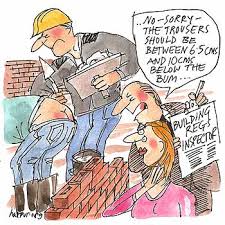
1   Our solicitor has been told that the mortgage company is still not happy with the legal paperwork, especially regarding the planning permission/building regs (http://www.planningportal.gov.uk/buildingregulations/) for the tiny side extension.  Considering this was built in 1988 I shouldn't have thought that planning permission was an issue.   This isn't something which has been mentioned before is it perhaps a red herring.

2  The mortgage company say that the solicitor hasn't asked for the money - and that it's too short notice to release the money in time anyway.

Do we believe this?  And why the stalling?!

12 September:  Telephone call received from our solicitor today to say that completion unlikely to take place tomorrow. Rather a nuisance as plans have been made. So have now unmade them, although all the furniture which is to go on the van and has been carried, some of it down two flights of stairs, is to stay in the front hall.   Completion is now likely to be in about a week's time.  Fingers crossed.


18 September: Email received from the vendor of the bungalow to say that there were big problems because their solicitor couldn't get hold of our solicitor.  Found out eventually that it was because their solicitor  had got into a muddle was ringing the wrong number. One problem solved.


Nothing to do with house move but made me laugh!
20 September:  Everything is being held up as we haven't sent proof of having taken out house insurance. So emailed a copy to our solicitor

23 September:  Rang the mortgage company to see what's what.  And apparently everything is being held up, not because we hadn't produced proof of house insurance, but because we hadn't noted on the insurance that the building society had an interest in the property. Subtle difference.

So rang the insurance company and they faxed a copy of revised insurance to the mortgage company.  When that had been received they reassured me that the funds will be released tomorrow so we can achieve completion.

24 September:  We are now the proud owners of a tiny bungalow!


25 September:  Survey and valuation of our house took place yesterday.  The person who carried it out was very nice - and not just because he said there were no big problems with the house, just some wear and tear which was to be expected.

26 September: Hired a long-wheelbase Transit van and, with the help of several kind friends, moved masses of furniture and boxes up to the little bungalow. After a couple of days of unpacking and sorting it's now a nice little 'pied a terre', complete with washing machine, cooker and fridge. 

27 September:  We tried to join the local library but no luck as we don't have any sort of up-to-date utility bill to prove residence.  However, the librarian allowed us to take out temporary membership, which means we can borrow up to four (free) books at a time but no chance to go on the internet.  The one thing it would be so useful to do as we aren't yet connected.

30 September: Returned home, with lots of empty boxes ready to fill again, and contacted the utility companies.  Gas and electricity were straightforward, but water was problematical as we needed to have given them a meter reading - but we didn't even know there was a meter!  So have asked daughter to look for us.   She eventually found one between two properties - which may or may not be ours! - but couldn't read it as the cover was ill-fitting, resulting in soil and dirty getting in and scratching the cover.  As she was unable to read it we will need to contact the water company again.  Moral of this tale:  ask if you have a water meter before moving in, and its location.

To be continued ...

29 August 2013

I've often heard people say: 'I can't stand whining children and there seem to be so whining children these days.'  Well, are there any more than there were years ago?  Or is it that we notice because we're not with children quite as often?  I'm not sure but, as a new Grandma feel it's time to brush up on my skills.

I suppose the first question is why do children wine in the first place?  Apparently it's straightforward: children wine to get attention, with a high pitched wine being so annoying that it can't be ignored.

This is not a conscious strategy on the part of children, but a learned behaviour - and parents often play a role.  If a child asks for something in a polite way and the parent doesn't respond the first time or two, the child with ramp up the volume.  A small child may yell or even throw a tantrum.  But an older child, who has developed more self-control, is likely to whine.


Parents are advised not to wait until the child is in distress to acknowledge her.  It's important to respond to that first bid for attention, if you can.  If you're on the phone or in the middle of a conversation, make eye contact with your child and put a finger up, so she knows you'll be with her in a minute. Then give your child your attention as soon as you can politely do so.


However, I do wonder if it's best not to immediately deal with her needs, otherwise she'll never develop patience. But knowing that she's been heard and her needs will be addressed soon is important and she'll gradually get used to waiting longer for help.

However, when whining does occur, parents should take a deep breath and remind themselves that the child is not trying to be irritating. The child is actually asking for help, see ideas here: (http://www.handinhandparenting.org/article/whats-the-cure-for-children-whining/)

This is a useful site for helping children to make the transition from whining to marshalling their thoughts, and asking for what they want in a reasonable fashion: http://www.ahaparenting.com/ages-stages/preschoolers/Life-Preschooler/pre-empt-whining


Here's a site which gives top tips on how to tackle whineyness:
http://www.supernanny.co.uk/Advice/-/Parenting-Skills/-/Discipline-and-Reward/Win-over-the-whiner-~-how-to-stop-your-child-whinging.aspx

  1. Be calm and clear
  2. Don’t be afraid of discipline, but don’t forget the praise
  3. Stop whining before it starts
  4. Pay attention to nap time/bed time
  5. Cut the sweets
  6. Be flexible


Wipe out whining gives the six Cs to help us cope with whining children: http://lovinglifeathome.com/2011/04/12/a-sure-fire-way-wipe-out-whining/

Now I can see I have lots of reading to do before tackling any whining and winging when looking after new grand daughter for the day.


I'm beginning to develop a mantra re parenting:  'If it's easy, you're not doing it properly'.  It isn't supposed to be easy, although at times it may be and it'll definitely be rewarding and lots of fun.  But our job as parents (and indeed grandparents!) is to bring up our children to be happy and responsible adults (and children help us to grow up too!)


Ah: and another idea: http://consciouslyparenting.blogspot.co.uk/2012/02/alternative-view-of-tantrums-and.html


26 August 2013


Today, many older people - even those living in the heart of a bustling community - feel isolated.  This could be as a result of bereavement, an empty nest, divorce, family breakdown or even just retirement.


But help is at hand for those who feel friendless and forgotten.


Loneliness has quietly become one of the biggest issues facing our nation.  Forty per cent of people over 60 live on their own.  One third of people in their fifties or above, and nearly half of those over 80, say they always or often feel lonely.  Half of older people regard TV as their main source of company.

On the bright side, it appears that across the UK there are many projects aiming to combat loneliness.  The UK's innovation foundation, Nesta (National Endowment for Science, Technology and the Arts) is highlighting the issue through its Ageing Well Challenge Prize. Its shortlist of five schemes to tackle isolation and loneliness includes a radio club where participants chat live on air from their armchairs, and a community cafe.  The £50,000 prize for the winner (why not £10k for five projects?), funded by the Cabinet Office, will be awarded in November.  Meanwhile The Big Lottery Fund is financing innovative schemes throughout the country that it hopes will be replicated.

First, a couple of relevant sites to view:

Bad health contributes to loneliness in old people:  http://www.bbc.co.uk/news/education-22108873

More than three million face a life of loneliness because of family break-ups and lack of friendly neighbourshttp://www.dailymail.co.uk/news/article-2233216/More-million-elderly-people-face-life-loneliness-family-break-ups-lack-friendly-neighbours.html


So here are some isolation-busting projects to inspire us.  By making older people participants as well as recipients, many of them acknowledge the wealth of skills and experience that the silver generation has to offer.

Become a radio head:  If you love Joe Loss, crosswords, or have a passionate attachment for your local football team, how about sharing your enthusiasm, stories and knowledge through a weekly radio show?  That's what Radio Club, a Nesta finalist, does by enabling older people in Birmingham to socialise from their own homes for an hour a week.

Members pass on their wisdom and thoughts, and because they're involved in the programme planning, they get friendly phone calls outside the Radio Club hour.  This means that both they and their growing band of listeners can be sure tat the content is what they want. 

As well as having a new sense of belonging and community, and feeling that their contribution is valued, they may be Sir Terry Wogan a run for his money.  This is a pilot scheme: the organisers hope to set up other clubs.  (See myradioclub.com)

Carry on learning:  There's nothing quite like ongoing learning to keep the grey cells firing.  The University of the Third Age (U3A) has a well-deserved reputation for the way it mixes discovery with companionship.  U3As are set up by members wherever and whenever an interest is shared, whether it's art, a modern language, chemistry, needlework, barn dancing or drama.  There are no entrance qualifications, lectures or exams - it's all for fun (see: u3A.org.uk).

For more formal learning that leads to qualifications, the Open University welcomes older students (see: open.ac.uk)

Preserve our heritage:  If you enjoy spending time in grand places, why not volunteer to support the National Trust at a property near you? Volunteers arrange flowers, help conserve artefacts, garden in spectacular grounds, drive buggies, bake cakes, not to mention guiding visitors and working with school parties.  Visit nationaltrust.org.uk and enter 'volunteer' in the search box.

Become a trustee:  Whatever your background, there is likely to be a charity that would welcome your experience and wisdom by involving you as a trustee.  It's about getting the match right and can be a great way to contribute to something worthwhile. Search for vacancies at trusteenet.org.uk.

Run a community cafe:  NANA is a comfort food and community cafe (and NESTA finalist) run by older women in Hackney, London.  The 'nanas' do the home cooking - which gets them out of the house, meeting new people, and showing off their skills. As the 'nanas' are at the heart of the service, they feel useful and involved; and commitment is rewarded with a percentage of the profits.  If you'd like to open a NANA in your area, see wearenana.com (or visit vimeo.com/55772878).

Share your knowledge: The Amazings is a new company renewing the principle that society should learn from its elders, enabling valuable - and sometimes rare - skills, knowledge and wisdom to be passed on.  Its tutors are all over 50 and have had life experiences worth sharing - there's a drummer, an illustrator, an entrepreneur, a vocal coach, a seamstress, a ukulele player - and many more.  Classes are fun and available to all age groups, and cost from around £12.  Based in London, they plan to go nationwide (theamazings.com).

Make new friends:  Childline founder Esther Rantzen has set up The Silver Line, a telephone befriending service that was launched in the North west and go national in November.  The service has so far had more than 2,000 calls and befriended 300 people.

'People often call for advice' but the team always explores why they're calling and whether they might welcome a regular conversation   It's about having something to look forward to.  This service makes a huge difference and has had much positive feedback, see thesilverline.org.uk.

Join a choir:  If you've seen the Gareth Malone TV programmes in which he brings together choirs in the most unlikely circumstances, then you'll understand the transforming power of singing.  Find local singing groups at nationalassociationofchoirs.org.uk or choirs.org.uk.

Get DIY help: Need a bit of decorating - and someone to share a pot of tea?  Silverlinks, run by Care & Repair England, enables older people in Manchester, Leeds and Bristol who face home repair, maintenance and even problems with moving home to get help through a volunteers' support system of older people.  The project helps during difficult times, such as bereavement or theonset of disability.  Volunteers with similar experiences offer an ear as well as advice (careandrepair-england.org.uk).

Come dine with us:  Nothing to do with the lurid TV series, except that this volunteer project in County Durham brings together older people in 'community dining circles' cooking for each other in their own homes.  There are lunch clubs, too - and all without larger-than-life voiceovers. (see ageuk.org.uk)


Get connected:  You might know AgeUK is a national network with day centres, lunch clubs and practical advice for older people, but did you know it runs a befriending service - either on the telephone or in person?  Each older person who gets in touch is assigned a 'friend' to chat to and provide companionship on a regular basis.  The telephone befriending service ' 'Call in Time' - is a daily or weekly call of about 20 minutes from trained friendly volunteers.
For the 5.2 million people aged 65 and over who have never been online, there are IT classes and support in the community, and in September there is to be a special week when you can learn about new technology and meet new people (ageuk.org.uk)

Swap skills:  Based on the age-old idea of bartering, Care4Care engages 500 neighbourhood volunteers of all aged to give their time and skills to more than 600 older people on the Isle of Wight.  In exchange for tasks - from shopping, odd jobs and repairs to IT knowhow and support when applying for help and benefits - each volunteer earns 'care time credits', which are saved into a care pension  for whenever the carer or their family needs support in future.  Contact AGE UK, Isle of Wight or visit care4care.org.

Similarly, Touchstones aims to build a network in Yorkshire to ensure that lonely older people feel connected and supported.  Run by Rural Action Yorkshire, the scheme provides information on local services such as gardening or repair work, and offers support from other older people in a similar situation who volunteer to share their skills, see info@ruralyorkshire.org.uk.


Shed some light:  Men in Sheds is a grass roots movement providing skill-sharing and companionship to older men, including Tools Company a group in Exeter whose project is one of the NESTA finalists.  Older men in the area repair old or broken garden and trade tools for local charities and to send to Africa for business start-up schemes.  Using donated tools and volunteer buddies, Men in Sheds gives older men a chance to spend time with kindred spirits and reconnect with practical activity.  See ageuk.org.uk/exeter/ourservices.


For 300 older people who are socially isolated in northwest England, Barrow RespectAbility offers a Men in Sheds project as well as running a cooking club, an active-living project and an eBay project selling specialist items, see barrowrespectability.wordpress.com.


Return to the farm:  If you've lived and worked in rural Dorset or Somerset, and miss your jobs, the Countrymen's Club offers therapeutic farming sessions, including working with animals and horticulture.

Run by Future Roots, the project aims to help older men to remain active, to retain and pass on their skills and also become involved in volunteering, see countrymen.org.uk.

Make a film: SPECS (Silver Dreams Project for Empowerment and Creativity in Care Settings) in the East Midlands is run by Learning for the Fourth Age (L4A) and is helping 100 people in care h omes, and another 40 who receive care at home, to make a film about their life, suitable for showing on a large screen to family, friends and the local community, see l4a.org.uk.

Do you know of any similar projects in your area? (if you do please contact: editor@saga.co.uk)

(From the August 2013 Saga Magazine)


Preventing loneliness and social isolation among older people: 
http://www.scie.org.uk/publications/ataglance/ataglance60.asp


And finally, I looked at various sites to see the secrets of avoiding loneliness and these conclusions

  • Differentiate between loneliness and solitude (http://www.wikihow.com/Deal-With-Loneliness)
  • Write in a journal - perhaps a journal of memories, as times change so quickly.  We we think of is ordinary is often amazing to the younger generation, such as the days before anyone had a phone, let alone a mobile phone.  How did we communicate way back then?
  • Or take time to sort out all those photos, making a note on them of where, when, who and perhaps adding any other information.  Perhaps enlarge the notes to make stories for the younger generation to read.
  • Connect with your community. How? Volunteer perhaps?  Or go along to local groups; for instance in our local library every month we have 'prime time' where older people meet for a talk with a chat and coffee afterwards.  Become involved in local issues -we can all make a difference.  Help with the 'friends' group at your surgery, go along to coffee mornings, help with the car service or perhaps they may have a befriending scheme. Every Tuesday evening two hours I ring people who are carers and often house-bound.  It's fun and not onerous as I'm ringing as friend so can also talk about myself.  This means we generate a two-way conversation (not like Samaritans where the person answering the phone is anonymous).  Over the months I've been doing it I've noticed a difference in the people I ring and it's certainly changed my views too - and I enjoy it!
  • Read a good book, and don't feel guilty if it's the middle of the day!  The same goes for knitting, sewing, crosswords, jigsaws, sudoku and all the other pastimes which used to be fitted in after the day's work was completed.
  • Or the opposite - be still and do nothing; we don't have to be busy every minute of the day.  Before the days on TV, or even electric light, people must have spent many an hour sitting quietly looking at the flames in the fire and thinking (or not thinking!).
  • Set up a date to meet a friend.  This is one of those things which we mean to do but often don't get round to.
I'm sure there are many more ideas - the public library is often a place to get more information, or the local council, doctors' surgery, local church, community centre, even some pubs, restaurants or cafes.  (here in Paignton we have 'Eat That Frog' (strange name!)  https://www.facebook.com/eatthatfroguk  and  http://www.torcom.org.uk/groups/eat-frog where there's all sorts going on.


(See:

http://rowdykittens.com/2010/03/8-simple-tips-to-overcome-loneliness/

http://communitynetworkprojects.org/sample-page/become-a-facilitator/

http://www.besthealthmag.ca/embrace-life/mental-health/5-ways-to-beat-loneliness)


An interesting article:
http://www.dailymail.co.uk/health/article-2020305/Beat-loneliness--avoid-stroke-Why-isolation-bad-smoking.html