18 January 2013

A rough guide to the solar system

This article is going to explore the Sun and its family, the one place where we know life thrives in the universe.  Our Solar System was born in a turbulent cloud of dust and gas.  About 4,570 million years ago, the ortating cloud collapsed, and dust and gas started to spiral inwards.  The heart of the cloud became extremely hot as the gas compacted; eventually, it was so hot that the gas (hydrogen) started to burn.  Our Sun was born.


Leftover dust and gas formed clumps.  Dust was dragged in towards the Sun, forming the rocky planets.  Jupiter and Saturn accumulated gas left behind as dust fell inwards.  Even farther out, Uranus and neptune built up from ice and the gas left over from Jupiter and Saturn.

Earth: When it first formed, nothing could have lived on Earth's surface, kept molten by collisions of asteroids and coments.
Over the past 4.5 billion years, it's gradually cooled.  But it isn't totally cold- volcanoes and earthquakes are signs that Earth is an active planet.  This activity is powered by the metallic core.  The inner core is solid, but the outer core molten.  Above are layers of hot, mobile rock - the mantle.

The skin of the Earth, or its crust, is a series of plates that fit together like a jigsaw puzzle.  They're in constant motion, floating on the partially molten rocky mantle.  Plates rub against each other, collide, move apart or on top of each other.  This leads to earthquakes and volcanic eruptions.
Our pale blue planet has an atmosphere that acts as a safety blanket.  It provides us with the oxygen we need to breathe.  It also protects us from the worst of the Sun's ultraviolet rays and cosmic radiation, while trapping heat.
Earth also has a magnetic field, generated by currents in its mobile inner layers.  The Earth has a 'top' and a 'bottom', a north and a south pole.  As well as helping homing pigeons, bees and colonies of bacteria to point in the right direction, this field has helped life to thrive because it deflects charged particles, from cosmic rays to the solar wind.
Moon:  One of the other unusual things about Earth is its enormous satellite.  The Moon always seems to have the same side turned towards us because the time it takes to rotate on its axis is the same as the time it takes to orbit the Earth.  The Moon formed in a giant impact between the newly made Earth and anothe rproto planet about the size of Mars.
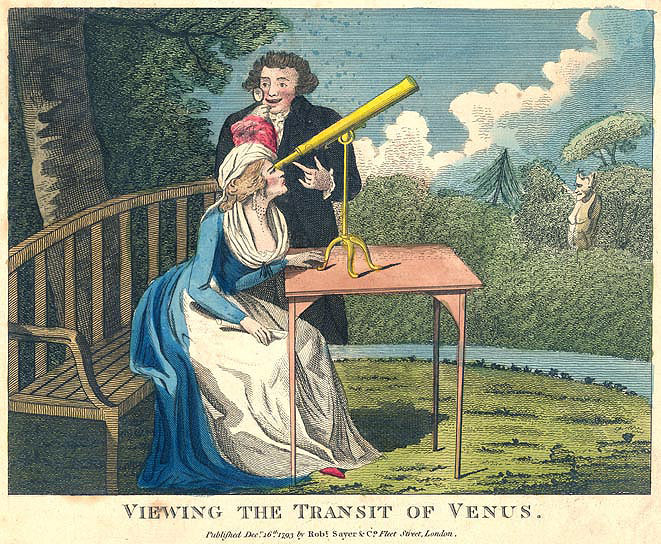
http://sunearthday.nasa.gov/2012/articles/ttt_73.php
Venus:  The surface of Venus is about 460C, the hottest planetary surface, and its atmosphere mainly carbon dioxide and incredibly thick, about 90 times the pressure of Earth's.  The atmosphere is the key to why Venue is so hot - it traps the Sun's heat, an extreme example of a runaway greenhouse effect and a sombre warning to what might happen if we let global waming from industrial pollutants get out of hand.

Mercury:  The closest planet to the Sun.   The say side of this heavily cratered planet is baked and cracked by the heat of the Sun, with temperatures up to 450C.  The night side is bitterly cold, temperatures down to -180C. It has no atmosphere, so its surface is scorched by ultraviolet.

Mars:  This cold, rocky planet has ltitle atmosphere.  But its more distant location from the Sun encures that its surface temperatures rarely rises above 0C.  Mars is distinguished by its huge volcanoes, a massive rift valley and channels carved by water or ice.  The red dust on its surface is scoured from the surface rocks, and has been oxidised by the Sun's rays.

Asteroid Belt:  Now we navigate through this belt of rocky debris.  The asteroids look like clumps of the dust left over from the birth of the Solar System that n4ever got built into a planet.  And that is what they are.  As the asteroids tried to clump together, the gravitational pull from Jupiter would drag them apart - so a full planet was never built.  Asteroids are odd shapes and covered in craters, testament to a long history of collisions.
Occasionally, one breaks free from the belt, and is catapulted towards the Sun.  If it lands on Earth it is a meteorite.

Beyond the Asteroid Velt, we encounter the gas giants, Jupiter and Saturn.

Jupiter:  The biggest planet in the Solar System is made of gas (hydrogen and helium), with a small rocky core, and it is orbited by rocky and icy satellites, 60 of them at the last count.  Jupiter is a failed star - it is just below the size that would have allowed it to shine like the Sun.  Its diameter is 11 times as wide as Earth, and it weighs 320 times as much.  If all the mass of Jupiter were squeezed into a planet the size of Earth, then a tin of beans would weigh 320 times as much as it does on Earth.
Thanks to the vast gravitational tug, Jupiter acts as a cosmic vacuum cleaner, hoovering up comets and asteroids if they pass too close.  This shields the Earth from many potential hazards.  The horizontal stripes around its surface are belts of clouds, moved by winds blowing at up to 400kph.  One obvious feature is the Great Red Spot - a vigorous storm  that has been raging for at least a century.  The spot is about as wide as the Earth.


Saturn: Like Jupiter, Saturn is made of gas with a rocky core, and has many satellites (at least 30).  Saturn's special feature is its rings - millions and millions of fragments of ice and rock, probably formed as the result of collisions between asteroids early in Solar System history.

Uranus & Neptune:  Although they are still about 50% gas, most of the rest is ice - not just water ice, but methane, carbon dioxide and ammonia.  Like Jupiter and Saturn, Uranus and Neptune are enormous planets surrounded by rocky and icy satellites.  Strong winds blow on the planets - Neptune has a great white spot called the Scooter that circumnavigates the planet every 16 hours.
Why do the giant planets have so many satellites between them?  It is partly because as they formed from gas, dust and ice, they produced their own spinning dust disc, each planet acting as a mini Solar System, and partly because their huge gravitational pulls attracted and captured wandering asteroids and comets.

Pluto:  Because of its small size and low density, some astronomers view the planet Pluto (2330 kilometers in diameter and just 1/6th our Moon's mass; on the left in the image above) as just a large comet. In addition to its size and density, the orbital characteristics of Pluto and its moon, Charon (1200 kilometers in diameter; on the right in the image above) around the Sun clearly show that they are members of the Kuiper Belt.  (from: http://www.astronomynotes.com/solfluf/s8.htm)


Having journeyed to the fringes of the Solar System, here's the largest object within it.

The Sun:  This is the powerhouse that runs the Solar System, giving out 400 billion billion billion watts of power - equivalent to 4 billion billion billion light bulbs.

Although the star seems to shine steadily, the solar surface is actually a boiling, heaving mass, throwing out massive jets of charged particles and gas.
The Sun as been burning hydrogen into helium for 4,567 million years - and it has enough fuel left to keep going for about the same time again.  We need not worry about running out of solar energy.

Solar System


From a talk by Dr Grady, of the Natural History Museum, London.


16 January 2013

RUBY CELEBRATION

The Annual Craft4Crafters Show* is on later this month at Westpoint, near Exeter.  

We at Westcountry Embroiderers** are exhibiting work to commemorate 40 years of WCE, with articles on the theme of 'Ruby Celebration'.  I'm looking forward to seeing what everyone has made as members of the group are an eclectic bunch and we each have our own areas of interest and expertise.

My entry is a crazy patchwork piece which I chose to represent the patchwork of skills, interests and ideas of our group.  


On this patchwork piece are many of the stitches I've learned over the past few years as a member of the friendly Paignton group.  

Having exhibitions like this is very good for us as it reduces the number of UFOs (unfinished objects) carefully put away in drawers which never see the light of day.  It encourages us to actually finish things!


* http://www.craft4crafters.co.uk/
** http://www.westcountryembroiderers.co.uk/

15 January 2013

Here are some photos from our trip down to St Ives last week

Image of the harbour at St Ives

Pendinas At Low Tide
The Island at St Ives (see: http://www.pznow.co.uk/locplace1/stives5.html)

view from our bedroom window!
We stayed at the excellent Chy-an-Albany Hotel (http://www.chyanalbanyhotel.com/) which would have had a fabulous view of the bay, had the weather been more clement.  Unfortunately, from our room we wouldn't have seen the sea anyway as we faced the back and overlooked the kitchen fans!  The food and service were excellent and, although it rained most of the time every day, the hotel was lovely and warm.


There are many picturesque lanes in the centre of St Ives with old fishermen's cottages, some of which are now arty-type shops.  These shops sell an amazing variety of good quality mainly hand-made products that are not easy to find elsewhere.  Here are a few which caught my eye.
Mr Lion peeps through
An inspiring shop window
Stained glass window of the Castle pub


On the last day we went to the lovely Art Cafe with friendly owners in Court Arcade, off Royal Square, St Ives (http://www.stivescornwallblog.co.uk/2010/08/cafe-art-royal-square-st-ives-cornwall.html).  In the arcade there are several shops, including a wonderful knitting shop with knowledgeable proprietor, Kay Bartlett (http://www.thisiscornwall.co.uk/shopping/wool-shops/house-bartlett/business-12840557-detail/business.html).  I wish we'd discovered that area earlier as would like to have seen more.  We enjoyed a delicious lunch at the friendly the CafeArt, The Drill Hall, in Chapel Street.

We found this arcade whilst on our way back from visiting the Leach Pottery (http://www.leachpottery.com/) one of the must-see places to visit when in St Ives.  The Leach Pottery is part of the Art Pass scheme (Art Pass ticket costs £14.50 (£8.50 concessions for joint entry to Tate St Ives, Penlee House and Hepworth Museum for 7 days)
by Barbara Hepworth

An intricate Hepworth sculpture
We spent some time at the Tate St Ives and also, in between showers we wandered round the Hepworth Sculpture Garden.  


The miracle is how some of the huge sculptures were moved into the garden, once they'd been up to London to be bronzed.


Gun emplacement dating back to WW2, on The Island at St Ives


Porthgwidden Beach, at St Ives, see from The Island


Painting by Richard Tuff
This winter's project


Somehow (must have forgotton how difficult knitting patterns are!) I offered to knit a cardigan rather like the one worn by Starsky in Starsky & Hutch, the 1970's Cop Thriller series (see: http://www.imdb.com/title/tt0072567/ and http://tvtropes.org/pmwiki/pmwiki.php/
Series/StarskyAndHutch). 
It's the sort of design which has been out of fashion for several years, whilst everyone wore plain knitwear and distained pattern of any sort.  
But, possibly since the famous jumper worn by Detective Sarah Lund in the series The Killing, Nordic-type patterns have become all the rage (see: http://en.wikipedia.org/wiki/The_Killing_(Danish_TV_series).


Wool has arrived, all present and correst
The time-frame for this project is five weeks: 35 days.

Day 1:  The wool arrived yesterday and I've made a good start.  The rib was pretty straightforward - but the pattern, oh dear!  It's so complicated and requires lots of concentration.   The pattern was so difficult to read that I've written it out again, just noting down the size I'm doing. 


Pic shows my home-made instructions in the background


Starting the pattern has been time-consuming but I'm confident that it'll get easier.


Interest from the cats doesn't help at all.  But of course they love in playing with all the yarn.  After all, what other reason could there be for buying so much wool?!

Day 4:  Have had to undo it all as the tension square was inaccurate (only number of stitches was given, not number of rows as is in more modern patterns) and started again, here is the first sleeve so far.


Day 5: I've knitted quite a few rows on the second sleeve today, then did some more of the first sleeve, pattern complicated and rather mind boggling so I prefer to do a few rows at a time.


Day 8: Didn't do much over the weekend as had guests, so am very pleased to say that now one sleeve is finished, with the other one more than half way through.


Day 13:  Two sleeves finished, one of which has an error, will see how much it shows.  Have now started the back and front left.  The pattern at the bottom is far simpler than the one shown here, perhaps should have started with one of these, but never mind.

++++++++++++++++++++++++++++++++++++++++++++++
Incidentally, whilst I'm knitting this cardigan, David's busy kntting a blanket for a new member of the family.  Here's a photo of the first few rows.  As you can see it's quite a challenge, not an activity which can be carried out at the same time as watching TV!


++++++++++++++++++++++++++++++++++++++++++++++
Two sleeves (middle and right), with nearly completed back  (on the left)
Note that the bottom part, nearest the camera is just colour B!

Day 18: Back nearly finished when - catastrophe! - the bottom part was knitting using only yarn B (brown), instead of including some yarn C (chestnut)!


Day 27: After a few days away, I'm back to grindstone!  Have found some of the pattern confusing, cut out the different parts of the cardi and gone through them very carefully with a patient friend.  

Sometimes it seems that the writers of knitting patterns often assume things they don't write down.  In this instance it was because it was time to make the pocket but this wasn't given in the pattern until after several rows had been worked beyond where the change took place.  Here is the latest photo:
This pic shows the two sleeves (finished), back (nearly comleted) and the left front which has been worked up 'til the pocket.
This is a photo of 'our' guide dog. Tilly is growing up very fast.  At present she's attached to a family who will get her used to people and basic discipline, ready for the real training to be a guide dog.

++++++++++++++++++++++++++++++++++++++++++++++


And the baby blanket is coming along apace - probably something to do with my being away for a few days, so David could get on with knitting in peace.  It's now nearly 16" long! - and very, very wide:

++++++++++++++++++++++++++++++++++++++++++++++

Day 28:  Two fronts have now been knitted up to pocket level.  It's the first time I've knitted such a pocket and it's really straightforward: 
rhs and lhs both knitted up to the pocket level
Day 29 (Monday): Right side now completed!  Yipee!! Only the left side to finish, then the collar -  oh and the dreaded sewing-up - and the project will be done!  
rhs nearly complete
It seems to be using far less yarn than the pattern specified, so perhaps I could buy a little more and make a second cardi.  Anyone interested?!

Day |?? :  I've lost track of the time. We've had a week away, cruising around the Red Sea which was lovely and warm and it was great to be looked after for a week and not have to lift a finger!  but it was hard to come back to chilly England.  

Anyway, the cardigan is coming along apace.  Back, both fronts (complete with pockets) and both sleeves are now completed.  Now to block out these, then start sewing them together and then start knitting the cowl neck.  The garment seems to be amazingly big, so I hope the recipient is pleased!

Day?? plus 2: Now the neck band is nearly half finished ...  (A very experienced knitter told me yesterday that she used to knit the band at the same time as knitting the front sides - more complicated but saves sewing up later, and means that the band is the correct length.  )

Day ?? plus 3: Neck band half sewn onto the cardigan front side.  It's starting to look good!  Must put a photo on here soon.

Fig 73Day ?? plus 5: Neck band more or less finished and sewn on to sides and neck.  
I decided that it would look better to graft the two sides together, rather than finish them off and then sew them together.   Grafting's something I've never tackled before but I found a helpful article at this site: http://www.learn2knit.co.uk/knitting/joining.php

?? plus 6: Malcolm is helping me grafting the centre back collar: 

?? plus 10:  Cardigan all finished and sent off to lucky recipient.  Hope it doesn't get lost in the post after all that hard graft!


13 January 2013

Black Rocks, near Wirksworth in Derbyshire
10 January 2013
The Black Rocks, after whom the area is known - they're dark, rather than 

It was a beautiful sunny day, following a very chilly, frosty night - such a great combination to produce interesting photos.


Overlooking the High Peak Trail

Lots of moss add interest to the structure of the trees and rocks


Part of the High Peak Trail


For more info see: 
* http://www.derbyshire.gov.uk/leisure/countryside/countryside_sites/wildlife_amenity/black_rocks/default.asp

Overlooking the nearby quarries


1 January 2013

Fit for Life
Taking the excess out of Christmas

Too much food and drink, fatigue and family stress?  To ensure that your celebrations are full of good cheer, here are some ideas on how to survive the festive season.

1   Love your heart: To avoid becoming a statistic, try not to get stressed (not always easy!) and don't overdo the rich food and drink. If you already have heart problems, don't forget to take your medication.

2   Avoid accidents: More than 80,000 people a year end up in hospital being treated for falls, cuts and burns during the festive period.   To help avoid becoming one of those, follow these obvious tips: 
  • Give yourself plenty of time to prepare Christmas dinner, keep guests (apart from helpers), especially children, out of the kitchen ... and save the tipple until you've finished cooking (shame, when cooking the meal is the best time to enjoy a glass of wine!)
  • Mop up any spills immediately.
  • Keep decorations and cards well away from open fires and other heat sources. 
  • Never leave burning candles unattended.
  • Falls are the most common accidents, so keep on top of clutter and make sure stairs are well lit and free from obstacles.
3    Beat loneliness: Christmas can exacerbate feelings of isolation,so in order to beat the holiday blues:
  • Stay busy and don't let Christmas dominate your life to the exclusion of all else.  Make time for other enjoyable activities, such as a trip to the cinema, a walk or reading.
  • Try volunteering: if you're not spending the festive period with friends and family, consider giving some of your time to charity, visit the national volunteering charity Time Bank (timebank.org.uk).
  • Call a friend: if it gets too much to bear, organisations such as Samaritans (samaritans.org) and Mind (mind.org.uk) have befriending services as well as offering support.
4     Keep moving:  Having so much to do often means you don't get any proper exercise, so don't sink into an 'it doesn't matter' mode.  Try to stay fit and flexible - and avoid piling on the pounds - it's vital to do some kind of activity every day, preferably something you can incorporate into your daily life.   Even ten minutes is better than nothing.  Why?  it helps to push down levels of triglycerides, harmful blood fats that rise after a rich, heavy meal, which can do untold damage to your arteries.

5   Eat, drink and be healthy: A typical Christmas day's food can tot up a colossal 6,000 calories - two to three times the recommended daily amount for most people.   Trying to eat rather less than that will definitely be beneficial in the long run.

6  Avoid the morning-after misery: The only cure for a hangover is prevention.  However, follow these tips to increase your chances of greeting the morning with a clear head. 
  • Know your alcohol limits.  What you drink is as important as how much: purer, clearer tipples such as vodka and gin contain fewer chemicals that can exacerbate hangovers - compared with red wine, whisky and cognac.
  • Slow it down as the body absorbs alcohol fastest when drunk  on an empty stomach.  Combining it with food results in slower absorption and less alcohol reaching the bloodstream.
  • Stay hydrated because drinking water between alcoholic drinks as well as before bed will help to combat alcohol's dehydrating effects, which are responsible for many hungover symptoms. If you've overdone things Vitamins B and C can help to ease the pain.
7   Want to throttle relatives?  Families are not an automatic recipe for harmony, especially as we all have our own idea of what makes the perfect Christmas.  Remind yourself that Christmas comes but once a year and remember these tips:

  • Stop trying to be the host with the most and learn to delegate.
  • Short and sweet wins the day.  some of the most successful family get-togethers are just two hours long.
  • Try to settle differences well in advance of the festive period when you're feeling calm.  If you feel a family row brewing, defuse it as fast as you can.  go for a walk to take some time out.
8   Trouble dropping off:  You may be physically exhausted, but if you're wired up with a to-do list as long as your arm, sleep can evade you. The answer is to allow at least 45 minutes to set the day aside and relax into the night.  So enjoy some downtime before turning in. Read a book, have a relaxing warm bath, listen to some music and drink a arm milky drink or chamomile tea.  The object is to chill out before your head hits the pillow.

9  Useful ways to beat the bloat:  Although I'm still not sure what 'bloat', here are some ways to avoid getting it:
  • Eat little and often.
  • Sit down to eat, chew food well and hold back the chat to avoid swallowing excess air.
  • Sip rather than gulp at least six to eight glasses of fluid a day.
  • Avoid eating too much 'windy' veg such as peas, beans, lentils, onions, cauliflower, sprouts and cabbage.
  • Limit intake of foods containing the sweetener sorbitoil, which can trigger flatulence.
10   Joints playing up?  Overdid it on the dance floor and now your arthritis is giving you gyp?  Music can act as an analgesic and help to get you on the move again.  Apparently music travels along the same neural pathway in the brain as pain, so it can help to block the twinges.  Dig out a favourite CD or put your iPod on and see what a difference it makes.  If pain persists, try taking a glucosamine supplement.  This stimulates the production of substances needed for the joints to mend and move more easily.   Also, taking omega-3 fish oil with glucosamine works more effectively than gluc. on its own, so up your oily fish intake or take an omega-3 fish oil supplement too.

11   Don't get cold feet: Freezing feet after Christmas shopping?   A hot-water bottle or bath may seem tempting but the brain needs time to register that the ambient temperature is warming up. Heat causes blood to flow too fast for the surrounding blood vessels to cope with, pushing up the risk of chillblains.  It's far better just to rub feet briskly or don thick socks and slippers and let them warm up gradually.

12   And relax!  Try this quick neck and shoulder relax-er (these are also good exercises during and after using the computer)
  • Gently look over each shoulder.
  • Slowly bring an ear down to each shoulder in turn.
  • gently tuck your chin in towards your chest and feel the stretch in the back of your neck.
... And not forgetting

Watch who's coming to dinner:  Christmas food can be a minefield if one of your guests has allergies or food intolerance. Common culprits include sulphites and other additives (found in alcohol), histamine (found in cheeses such as Brie, Roquefort, Gruyere and Parmesan, as well as chicken, sausage, chocolate), lactose (found in milk products), wheat and gluten (found in cereals) and yeast (found in breads, ripe fruit, stock cubes and salad dressings to name but a few).
Check with your guests well in advance what they can and can't eat so you can plan your menu accordingly.  Visit allergyuk.org for ideas and advice.

Fight fatigue with aromatherapy:   A sweet-smelling environment can be hugely beneficial after hectic days of planning and Christmas shopping.  Put a few drops of energising essential oils onto a electric aromatherapy burner or into a bowl of hot water or a bath, relax and enjoy their therapeutic powers.
Alternatively sprinkle a few drops on a tissue or handkerchief and inhale.  Try:
  • Pink grapefruit and juniper berry to energise.
  • Frankincense to keep you calm.
  • Geranium and ylang ylang for an instant energy boost.
And, three ways to wind down fast
  • Dab a drop of lavender essential oil on your temples and wrists.
  • Rn up and down the stairs a couple of times.
  • Physiotherapists say to try and stay loose, roll your shoulders regularly to prevent tightness developing in the neck and between the shoulder blades.